

Two rooftop pools, a 2,300-seat Live Nation event space and a Trader Joe’s grocery store are just a few of the attractive amenities in a major new mixed-use development being built near downtown Seattle.
However, it’s the fuselage of a decommissioned Boeing 747-400 aircraft (tail number N178UA) suspended between the project’s two 48-story residential towers that draws flocks of AvGeeks, locals and Instagram-seeking visitors to the construction site.
“We’re Jet City, so why not add the plane that revolutionized modern air travel?” said Matthew Burchette, senior curator of the Seattle Museum of Flight, which displays the first 747 ever built, serial number 001. “Plus, it’s just cool.”
Measuring 250 feet long and 65 feet high, the plane is part of the 1200 Stewart St. project dubbed “Aero1200,” originally designed by Henriquez Partners Architects in partnership with Vancouver-based Westbank.
Development began in 2018 but was delayed many years by the coronavirus pandemic, strikes and a variety of financial, labor and legal issues besetting Westbank. Toronto-based OP Trust is now in charge of the project.
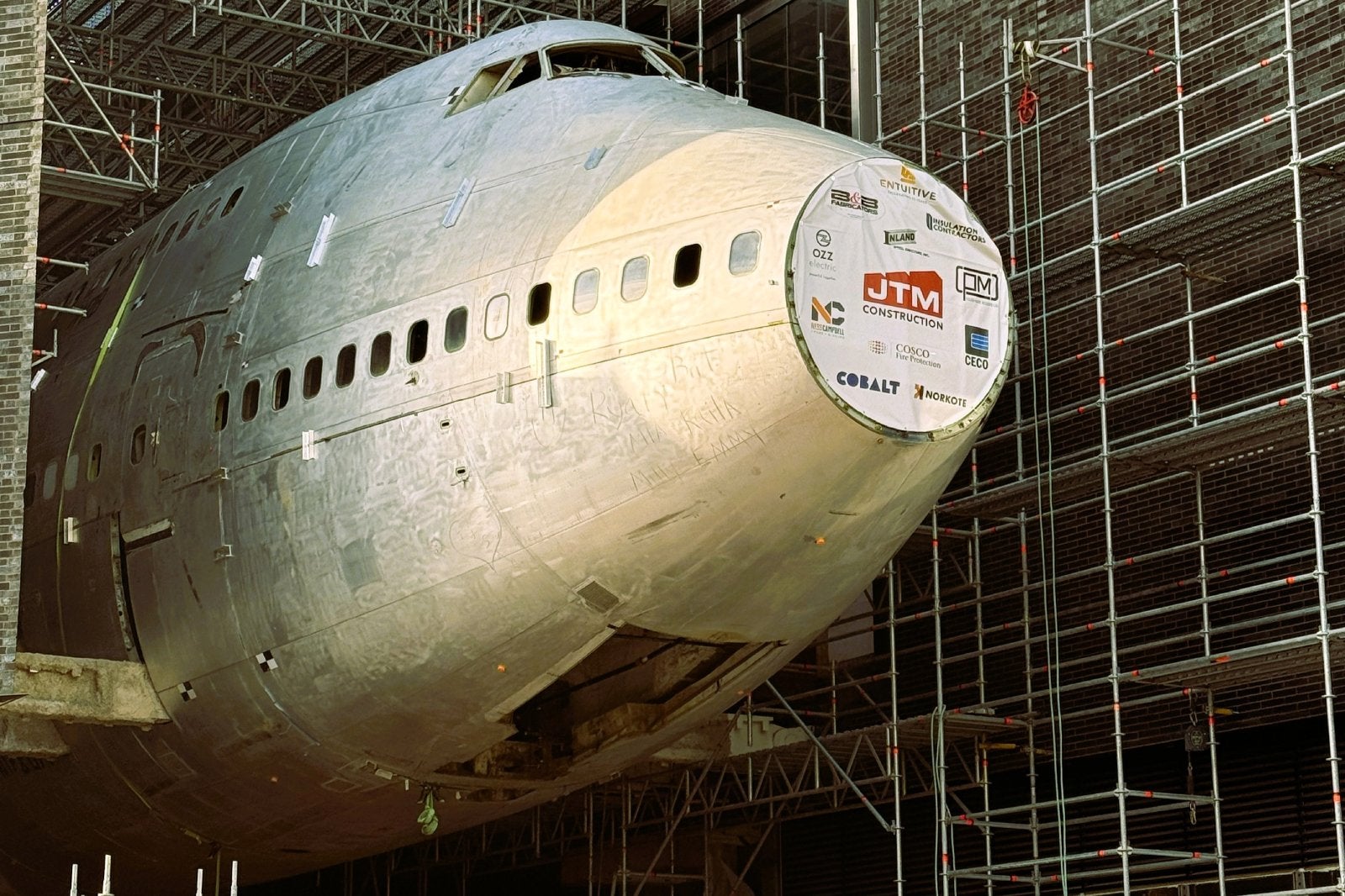
The architectural element of the plane is, of course, intended to be eye-catching. But it’s also meant to be a nod to Boeing’s legacy, its birth in Seattle and the company’s iconic 747 aircraft, the “Queen of the Skies,” which was in production at Boeing’s factory in Everett, Washington, from 1968 until early 2023.
“We seek to recognize that legacy while also pointing to Seattle’s future,” Westbank said in a statement at the start of the project.
Including the 747 fuselage in the plans for development was probably the easy part. Getting the fuselage from the aircraft graveyard in Victorville, California, to Seattle was more complicated.
According to JTM Construction, the project’s current Seattle-based general contractor, original plans for the development showed the 747 as a complete, uncut aircraft. But for transportation, the plane was cut into 39 pieces so it could be transported on flatbed trucks.

Reward your inbox with TPG’s daily newsletter
Join over 700,000 readers to receive breaking news, in-depth guides, and exclusive offers from TPG experts.
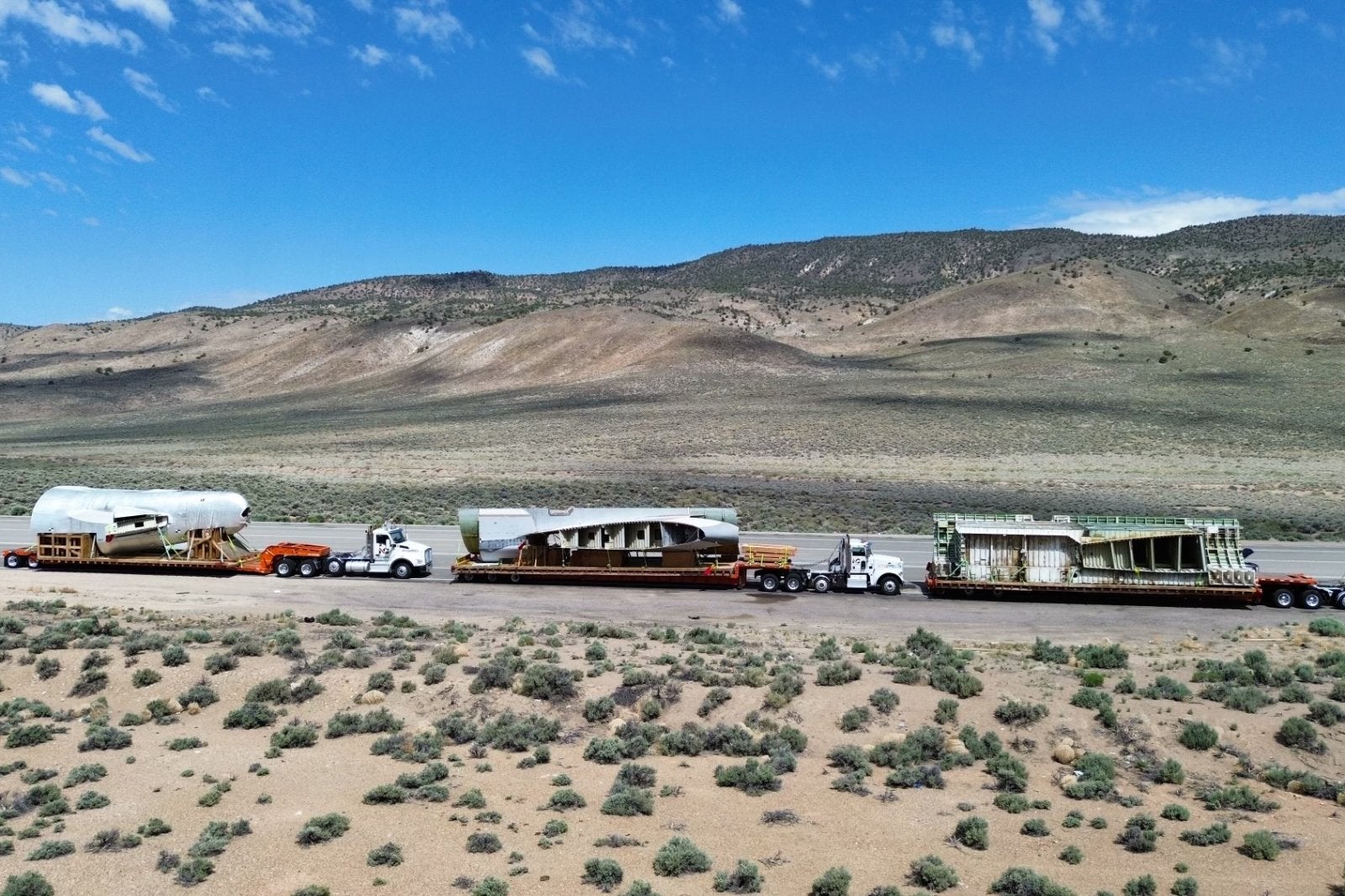
“There are oversized loads and then there are super loads, which are over 16 feet wide,” said Aaron O’Kelly, senior project engineer for JTM. “The first 16 of the 39 pieces were considered super loads, and to transport them, we had to have a police escort from California to Washington.”
Police escorts, special permits and middle-of-the-night street closures were then needed to transport the plane parts from Toledo, Washington, about 100 miles to the construction site in a congested part of downtown Seattle. Finally, in November 2025, JTM and its construction subcontractors were able to begin putting the aircraft back together.
“We cut out the floor that was on the plane and now we’re basically wrapping the original fuselage pieces around a new steel structural floor that connects the two buildings,” O’Kelly told TPG. “We estimate that more than 60,000 new fasteners – rivets and bolts – will be needed to reassemble the aircraft.”
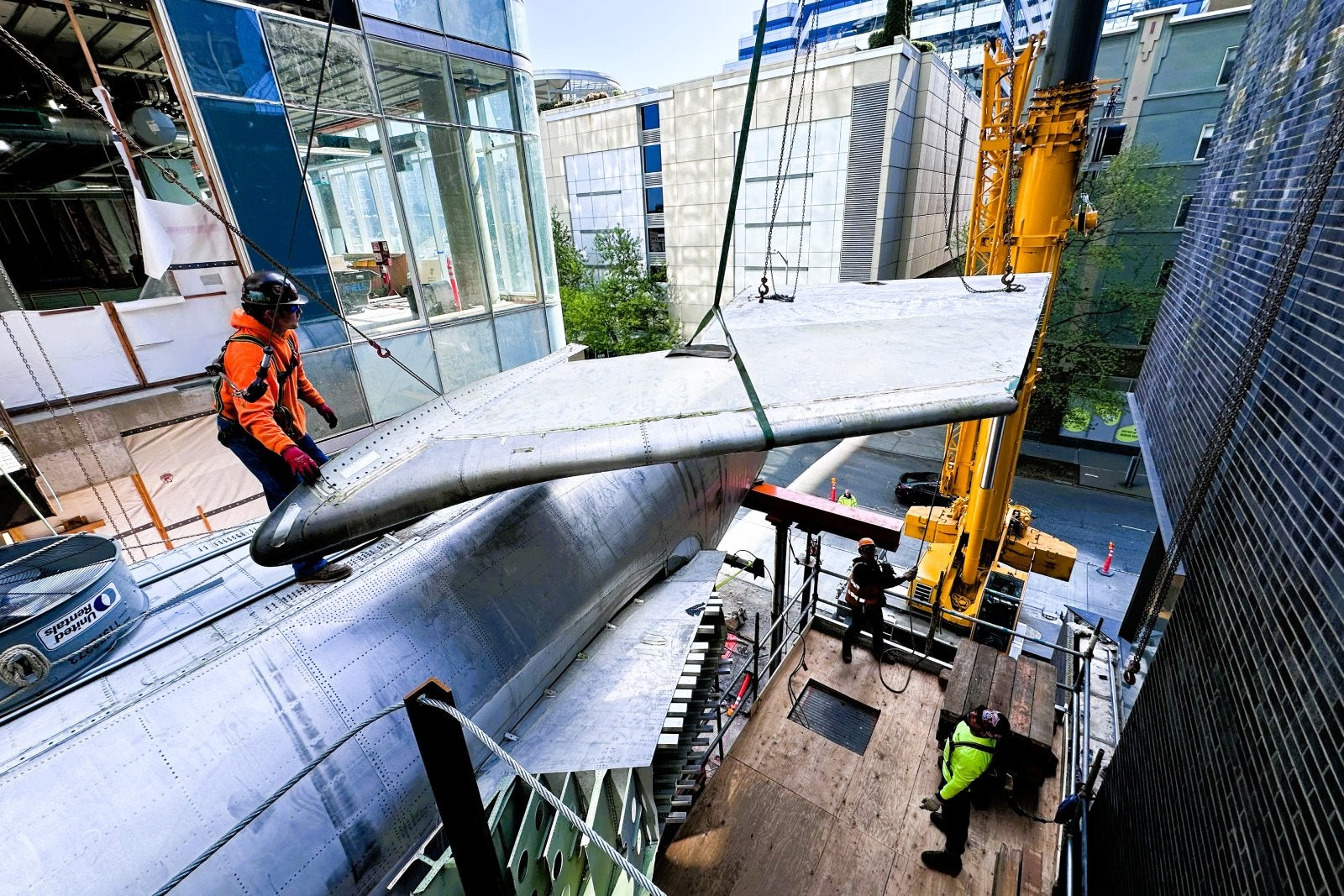
The completely intact cabin was recently installed. Next comes the vertical stabilizer, tail and nose.
“The nose will be the last official piece,” O’Kelly said, noting that in buildings, there is usually a topping-out party when the final beam is placed. “We’re thinking that when we put on the nose as the last piece, that will be something ceremonial.”
At this time, there are no confirmed tenants or established uses for the 747 fuselage at the 1200 Stewart Street project, but there are plenty of ideas floating around.
“Maybe they could put a cafe there. Or a dance floor. Or just imagine a bowling alley inside a 747,” said Mike Kloppenberg, aircraft maintenance assistant in the Museum of Flight collections, who recently toured the site. “Whatever they do, it’s great that this airframe is being put to good use.”
