

The ocean makes that silent effect on your perspective. You can travel for years, racking up cities and mountain ranges and long-haul flights, and still, I think, nothing resets you like slipping beneath the surface does. Everything smoothes out. The noise disappears. Your thoughts don’t exactly disappear, but they slow down enough to leave room for wonder again.
Some of the most powerful travel memories people carry don’t come from iconic places at all. They are of moments that last only a few seconds: a shadow moving across blue water, the sudden movement of a fin, the strange calm of floating weightlessly over a living reef. For those drawn to scuba diving and close encounters with sharks, few experiences seem as otherworldly as encountering a school of hammerhead sharks in open water. If that image has ever crossed your mind, even briefly, this guide to the best places to Dive with hammerhead sharks. It’s a quietly compelling place to start dreaming:
What follows isn’t about checking boxes or chasing extremes for the sake of it. These are oceanic encounters that last. The kind you think about months later, sometimes without knowing why. Ten moments, scattered throughout the waters of the world, that could earn a place on your bucket list.
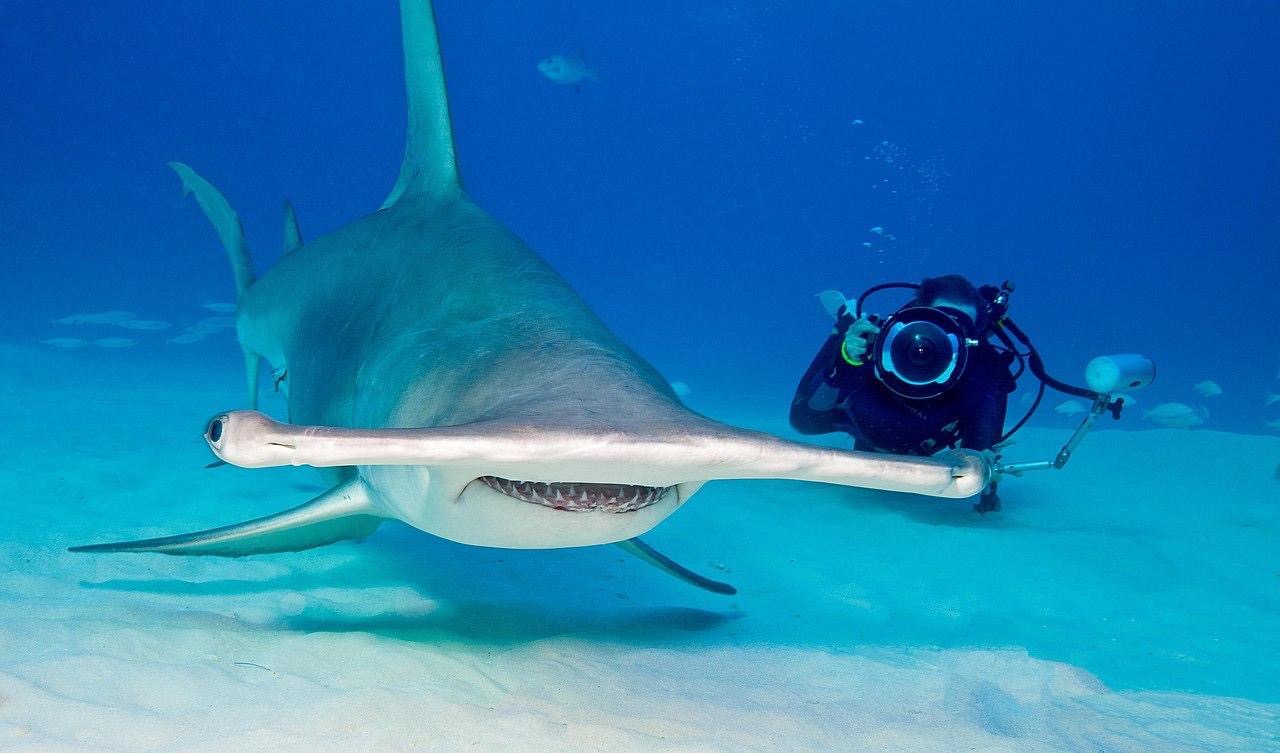
1. Swim with hammerhead sharks in nature
There’s a strange moment that happens before you see them. The water feels empty. Almost too empty. And then slowly the shapes begin to materialize, unhurried and undramatic, just there. One line. Then another. Then, suddenly, an entire procession of hammerhead sharks moves with an ease that seems unreal.
Diving with these sharks is not about adrenaline like people usually expect. It’s quieter than that. More observant. You’re not chasing anything. You are simply a guest, suspended in their world, aware of your own smallness in a way that calms you rather than frightens you. Places like Cocos Island and the Galapagos Islands have built quiet legends around these encounters, and rightly so. Few ocean moments feel so cinematic without trying.
2. Drifting with manta rays at a cleaning station
Manta rays move like thoughts. You almost remember it. Slow. Broad. Easy. Typically, you’ll first see them above you (a dark, slithering shape passing through rays of light) and then they circle, over and over, returning to the invisible edge where the reef fish do their silent work.
In places like Hanifaru Bay, the experience borders on the meditative. You are not swimming alongside the mantas but rather sharing their airspace. They pass close enough to feel the movement of the water against the mask. It’s gentle. Almost tender. And yet vast.
3. See how the sardines’ journey develops in real time
If most encounters in the ocean seem poetic, the sardines’ journey seems mathematical. Millions of fish moving as one. The bait balls tighten, loosen, collapse and reform. Predators crossing at impossible speeds.
Off the coast of Port St Johns, it unfolds like a living algorithm: dolphins herding, sharks attacking, seabirds diving from above. It’s chaotic, yes, but there is a structure underneath. Intelligence. Design. Standing in the middle, you stop thinking about sentences. You think in movement.
4. Night diving with bioluminescent plankton
This is the kind of experience that is difficult to photograph and even more difficult to explain. You enter black water. True black. And then, with a quick wave of your hand, the light explodes around you in tiny sparks. Every kick, every movement, leaves a trail of bright blue fire.
In the sheltered bays around Vieques or Holbox, the ocean becomes a sketchbook of light. It feels playful. Almost reserved. As if the sea is letting you in on a trick that doesn’t work for everyone.
5. Dive the Great Blue Hole from the inside
From above it looks perfect. Too perfect, even. An almost circular darkness carved into the turquoise water off the coast of Belize City. From below, the feeling is completely different.
You descend beyond the sunlight, beyond the familiar life of the reef, into colder, darker waters. The stalactites look like frozen teeth. The shadows spread. Immersion isn’t especially lively in the biological sense, and that’s the point. It’s about scale. Depth. The knowledge that you are floating within a structure prior to memory as we understand it. It remains with you silently.
6. Snorkel with whale sharks at the surface
It always begins with disbelief. The guide points. You strain your eyes against the glare and the waves. And then, somehow, the world’s largest fish appears next to your boat like a drifting continent.
In places like Isla Mujeres and Donsol, whale sharks arrive seasonally, patient and unconcerned by human excitement. Swimming next to one is strangely humiliating. You keep up with their pace for a few seconds, maybe a minute, before they simply effortlessly overtake you. It turns out that size does not imply strength.
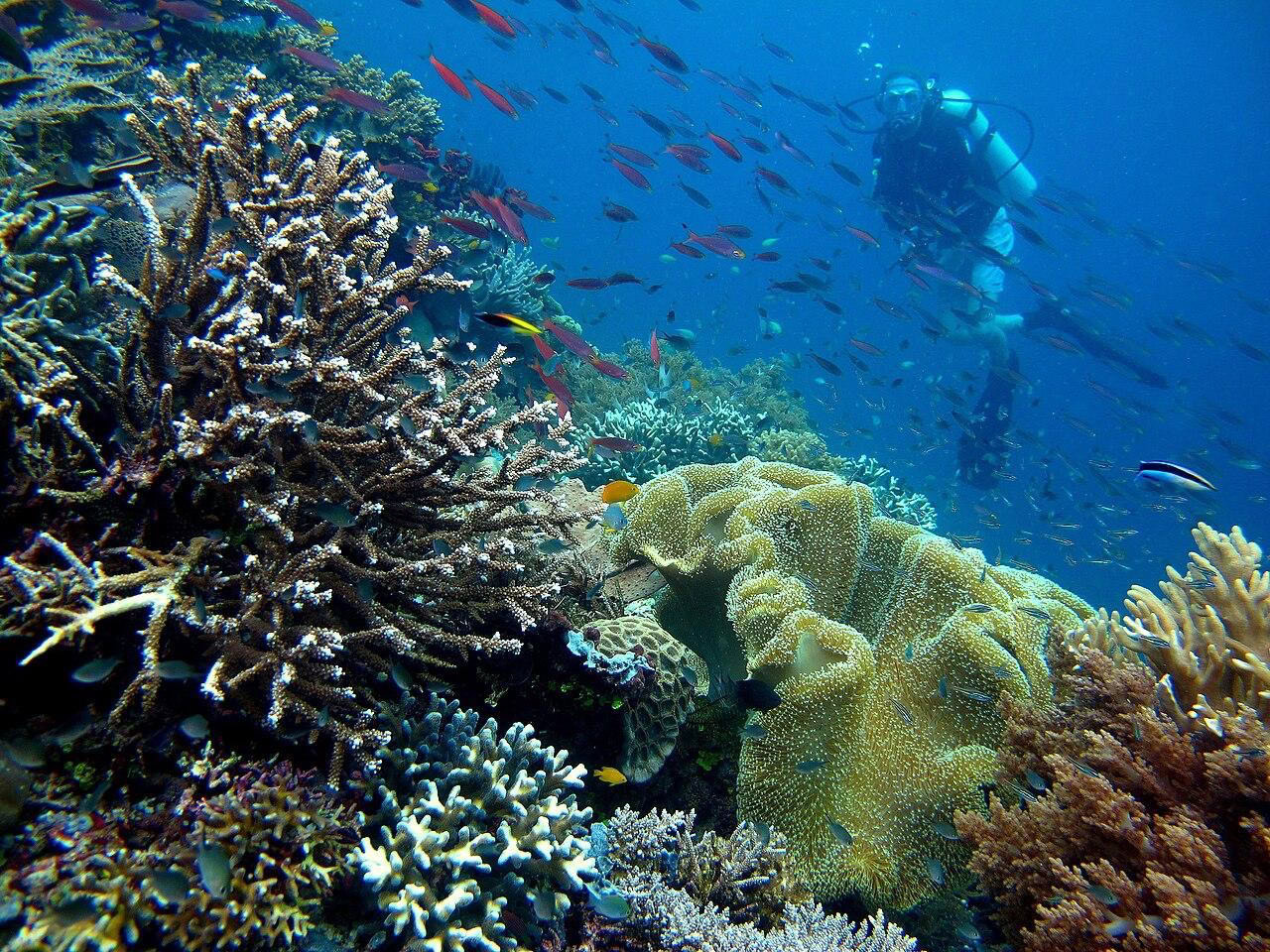
7. Explore a living coral reef at sunrise.
The reefs seem busy during the day. At dawn, they feel intentional. The first light slides along the edges of the coral. Fish emerge in waves rather than crowds. The predators retreat. The shepherds begin their silent work.
In places like Raja AmpatDawn dives reveal the reef not as a spectacle but as an awakening system. There is no soundtrack. Just silent movement and the strange feeling that you have arrived before the world completely remembers itself.
8. Listen to humpback whales below the surface
You don’t always see them first. You often hear them. Low, resonant calls that seem to pass through bone instead of water. It’s unsettling at first: a reminder that sound behaves differently down here.
In the waters of Moorea or Tonga, swimmers sometimes share space with migrating humpbacks. There is always distance. I respect. But even from afar, the presence is unmistakable. You feel watched without feeling threatened. Observed by something older than the idea of tourism itself.
9. Sailing in slow motion through a kelp forest
Kelp forests don’t advertise themselves. They look out. Long golden leaves extend upward from the darkness, moving with the tide like a slow, synchronized breath. Light filters in ribbons. Fish dart between the stems like punctuation marks.
Along the coast of Monterey Bay, diving through kelp seems strangely terrestrial. It’s the closest the ocean gets to feeling like a forest you could walk through if gravity allowed. Don’t rush here. Space encourages patience.
10. Floating freely on a cliff in the depths of the sea
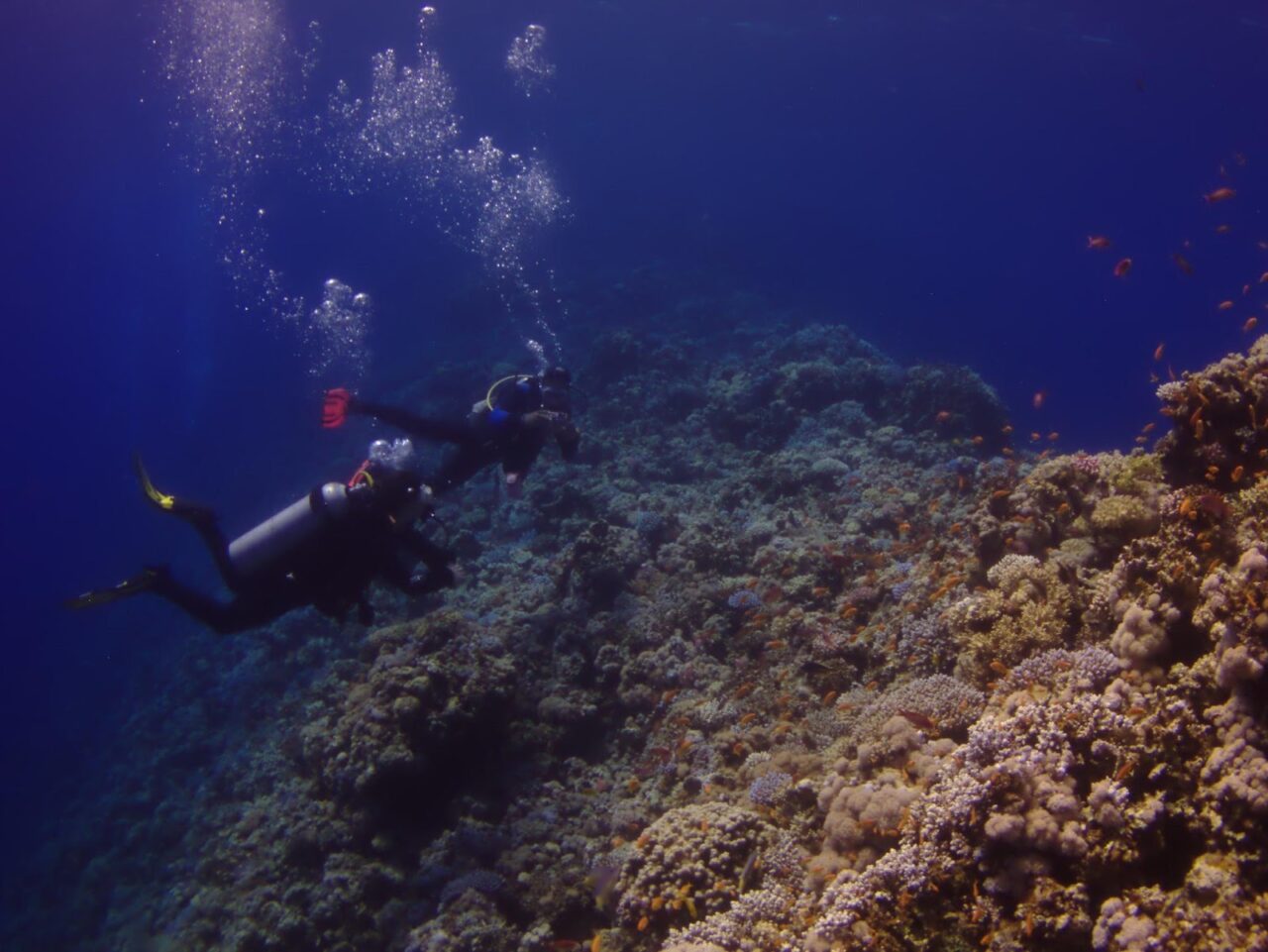
There is no wall in front of you. There is no bottom visible below you. The blue just fades into a darker blue, then nothing you can clearly define. The slopes, such as those in the Red Sea or those on the edges of Indo-Pacific atolls, create a subtle psychological change.
You become very aware of depth, not in meters, but in sensations. Your buoyancy. Your breathing. The invisible volume under your fins. It’s not fear exactly. It is consciousness at full volume. And once you’ve felt it, running water never feels the same again.
A quiet note on how we choose to experience the ocean.
It’s easy to chase these moments like trophies. A list. A map with pins. I’ve done it sometimes too. But the more time you spend in and around the ocean, the more clear it becomes that how you experience these encounters is just as important as seeing them.
Diving, when done mindfully, is one of the few ways we are invited into this world without taking anything away from it. Good buoyancy. Respectful distance. Guides who understand not only where the animals are, but also how to protect them. These details may seem small at the moment, but they shape the future of each encounter on this list. Maybe even if they will still be possible in another generation.
Traveling, at its best, changes something within us. Sea travel is done quietly and without fanfare. Ask for attention. For patience. For moderation. And in return, it offers moments that don’t quite fade away (at least not entirely) no matter how far from the water you find yourself later.
If these encounters call to you, take your time with them. Choose carefully. Move gently. I think the ocean notices the difference.
About the author
Kyle is a travel writer and digital content specialist with a long-standing focus on wildlife travel, underwater exploration and responsible tourism. With years of experience working at global travel brands and independent publications, Kyle writes with a balance of curiosity and caution: drawn to the emotional appeal of adventure, but always attentive to the ecosystems that make those experiences possible. More information about this work, along with detailed destination guides and thoughtful travel stories, can be found at world travel guide. When he’s not investigating remote shores, Kyle is often refining story angles, studying marine habitats, or quietly planning the next dive.
